
The word "game" makes people think of something that is fun and easy, something you don't really have to put any effort into, something you can just do to relax. When coupled with the word "programming," however, things become a whole different story.
I said in my welcome post that I've been scripting and programming since 2003, which is something of a lie, since during the last year and a half I haven't done much of either in my free time, since all my programming effort has been focused on school.
This semester, though, I am taking a Software Engineering class that provides a perfect excuse to break out an old project and make myself finish it. This will be my third attempt to break into the world of 3D graphics programming, complete with all the vector algebra and matrix transformations that 3D visualization is based on.
For this try, I've decided to go back to OpenGL, after having a pretty pleasant experience with DirectX, but running into a few too many derisive comments from hip UNIX users. (In case you were wondering, yes, Microsoft is the devil.) Both libraries seem fairly intuitive, so it's really not an issue.
Showing posts with label scripting. Show all posts
Showing posts with label scripting. Show all posts
Wednesday, October 1, 2008

Neverwinter Nights
In 2001, Bioware released a game called Neverwinter Nights. The game itself offered decent gameplay and a fairly shoddy RPG storyline, which was enough to separate it from the majority of RPGs that year since most of them had poor gameplay and fairly shoddy RPG storylines. (For those unaware, RPG stands for role-playing game, which I think is a misnomer since most of them consist of you playing the role of somebody who kills lots of random monsters without much incentive for doing so.)
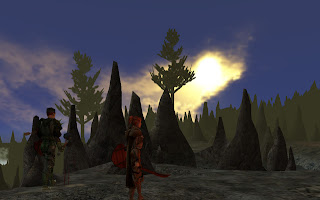
What really has separated Neverwinter Nights from the other games of its kind is that the developers made the smart decision of releasing the module design toolset with the game, complete with a versatile scripting language that lets customers create just about any effect you can imagine in what amounts to a 2D field of motion rendered in three dimensions. It's basically a budding game designer's dream, being able to manipulate the workings of a full commercial game.
With relative ease, just about anybody can use the Bioware Aurora toolset and jump into the role of a commercial game designer and scripter.
Subscribe to:
Posts (Atom)

 Posts

